

How Neymar became a Ghost
The spirit of samba returns to haunt A Seleção

Mineiraço
On July 8th 2014 the Brazilian anthem blared around the Mineirão before the World Cup semi final between Brazil and Germany. Júlio César and David Luiz, both rattling with emotion, clutched a Brazil jersey between them. It held the name and number of Neymar and was so jagged with crease lines it looked on the verge of snapping.
In the previous round Neymar, the talisman of A seleção, had suffered a spinal injury which ended his involvement in the tournament. As the anthem volume ebbed away to let players and fans roar the remainder of the lyrics together, the event took on an odd and solemn air. If you tuned in not knowing about the injury you would likely think Neymar had tragically passed and this was a heartfelt tribute to the fallen genius. He loomed over proceedings and his absence from the ensuing devastation at the hands of Germany absolved him of any guilt. That was the day that Neymar began to haunt Brazil.
The 1-7 loss immediately manifested into a neurosis of continental proportions known as the ‘Mineiraço’ (the blow of the Mineirão). Neymar, untarnished, became the symbol of hope for the fans, a spectre that floated over proceedings; if he had played, the disaster would not have come to pass. Suddenly the Brazilian footballing consciousness had whiplashed around the idea of their samba prince and held it close. He was their salvation, wedded to the very idea of Brazilian success. In their desperation they would come to rely on the unreliable.
Brazil
If any country is synonymous with the World Cup it is Brazil. The canary yellow jersey, the blue shorts, the iconic nicknamed players; all these ingredients combine to lend the tournament an undeniable cultural heft. When I hear strains of samba music, particularly the cuica, which for years I thought was some form of trained musical bird (you can hear it at the start of ‘Soul Bossa Nova’ by Quincy Jones), my mind instantly snaps to A seleção lining up before a match.
FIFA owes Brazil a great deal. Beyond success and entertainment, they brought culture to the World Cup, a larger than life identity that fans all over the planet could immediately grasp and understand. For me this type of exchange is the lifeblood and the superpower of football. Teams deal in culture in an organic transfer that happens around the nuts and bolts of the actual sporting affairs. People learn about other countries and customs and realise there’s many corners of our planet where people do things differently but ultimately enjoy the same basic activities as everyone else. I see it as a type of global humanising ritual, an entertaining inoculation against ignorance. With five World Cup wins Brazil repeatedly shared the country’s unique personality on the world stage through the decades, but with the 2026 edition of the competition they are about to equal their longest ever World Cup drought.

When the tournament kicks off it will have been 24 years since they last lifted the trophy in Japan at World Cup 2002. The previous comparable gap was between Mexico 1970 and USA 1994. Add to this the looming possibility of Germany equalling the record five wins Brazil have, and that anxiety amplifies into a sense of desperation. They’ve held top spot of the World Cup winners table since 1994 but for Brazil to be Brazil they need to be the mythical winners, out in front, the Real Madrid of international football, rising above it all.
Modern football is shaped against a backdrop of Samba skill but a sense of desperation clings to their participation in this specific World Cup. If they go out early or unceremoniously, it could prove to be the end of their cultural magic, the end of the mystique. When people feel desperation their openness to solutions increases and spurious schemes, obviously long shots in the cold light of a clear head, start to gain a magical appeal. Enter Neymar.
Neymar
For all the hope the young Neymar brought, his only success with Brazil has been the 2013 Confederations Cup, a small 8 team tournament held the year before the World Cup in the host country as a dress rehearsal. FIFA has since discontinued it. When the country managed to win the 2019 Copa América, the only other tournament of note besides the World Cup, he was absent through injury.
He’s not worn the canary yellow shirt since 2023 when he tore his ACL and many thought that traumatic injury was one too far, that a door had closed permanently. There was now a cast iron reason to omit him from any future squads and as a result the days of Neymar rainbow flicking his way around the opponents box were consigned to history. But South America does veneration of players better than anywhere else. Argentina has erected a religion around Maradona, Pele is regarded as a de facto saint in Brazil and since bringing home the trophy in 2022, Messi is enjoying a sort of living God existence. Neymar by comparison is loved more for his potential than in thanks for past glories. When he gained global prominence in 2010 he was seen as the great hope, but problematically for Brazil, in 2026 he remains that same great hope.
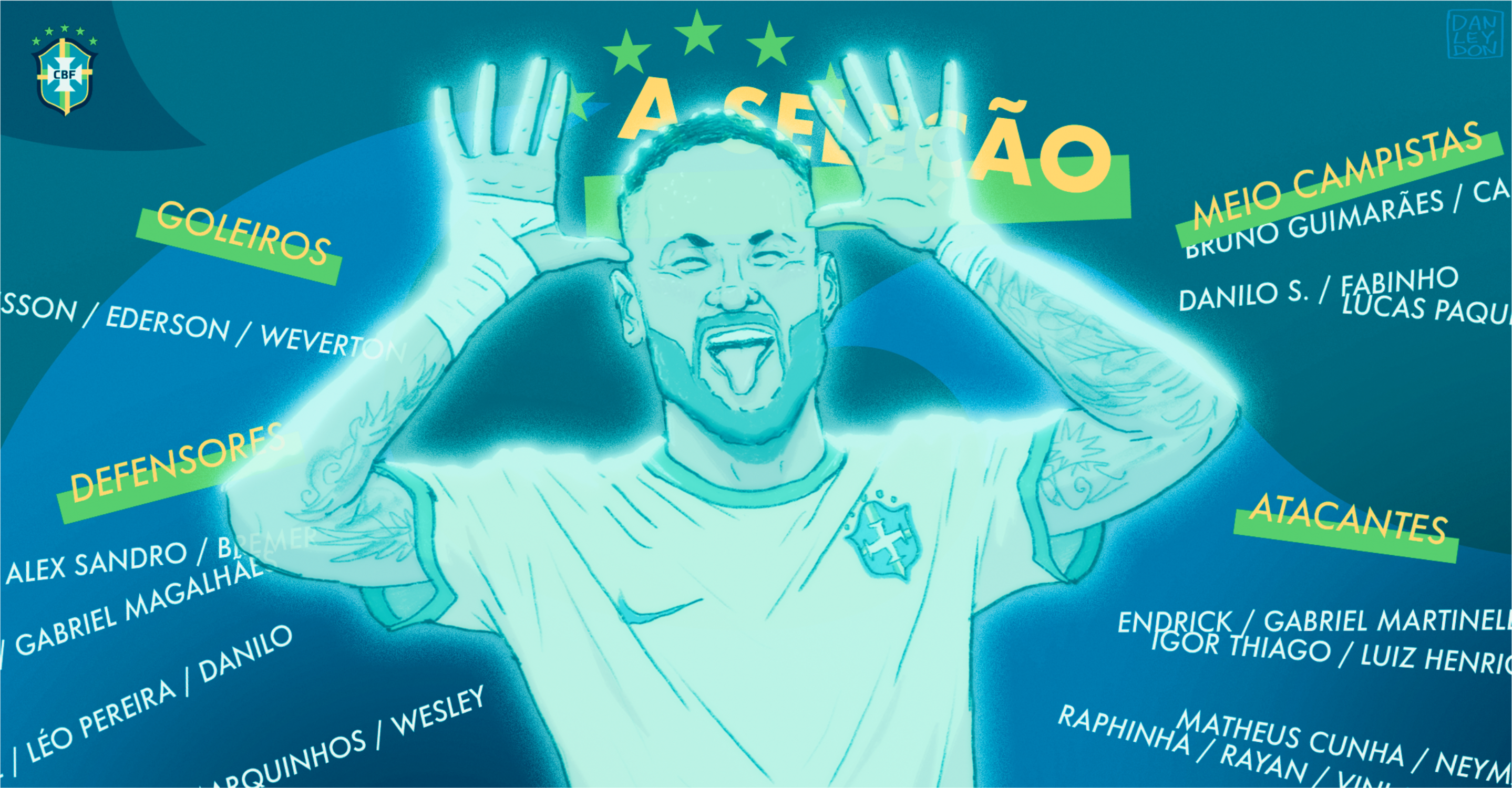
With his inclusion in the squad for the 2026 World Cup, Brazil have reunited with the flotsam prince of flicks. The ghost of the ‘Mineiraço’ has come back to haunt them. It remains to be seen if he will even be fit to play or if Ancelotti has merely used him as a media sponge so the press won’t concentrate on the real core of the squad.
In the eyes of the nation he’s a player frozen in time, a dazzling magician untainted by the ‘Mineiraço’, the ghost of a glorious football past, once again the vessel into which the country has poured it’s collective, desperate hope.
Further reading…

